Why Smartphone Prices May Increase in India in 2027 – Memory Chip Shortage Explained
Quick Summary: If you are planning to buy a new smartphone in 2027, expect higher prices—especially in the budget segment. The global memory chip shortage, driven by AI data centres, is making RAM and storage more expensive. Entry-level phones could see the biggest impact, with brands likely to reduce specifications or raise prices. Here is everything you need to know in simple words.

1. Introduction – Why Smartphone Prices Could Increase in 2027
If you have been thinking about upgrading your phone, 2026 may have already given you a hint: prices are climbing. The average selling price of smartphones in India rose by about 16% in the first half of 2026 alone. Budget phones under ₹10,000 became roughly 32% more expensive on average.
But the bigger question is: what happens in 2027? The answer lies in a tiny component that most people never think about—the memory chip. According to market research firm Techarc, smartphone brands in India may need a 45% price adjustment just to recover the memory cost burden in 2027 under its central scenario. That does not mean retail prices will jump by 45%—brands will try to absorb some of it. But it clearly signals where the wind is blowing.
This article explains the memory chip shortage in plain language, why it matters to every Indian smartphone buyer, and what you can realistically expect in 2027.
2. What Is a Memory Chip? RAM, DRAM, and NAND Explained
Every smartphone has two kinds of memory, and they do different jobs:
- DRAM (Dynamic Random Access Memory): This is the “working memory” or RAM. It temporarily holds the apps you are using, the photos you are editing, and the web pages you have open. More RAM means you can keep more apps running without them reloading.
- NAND Flash: This is the storage memory. It keeps your photos, videos, apps, and files even when the phone is switched off. The “128GB” or “256GB” written on the box is NAND storage.
Both DRAM and NAND are made in massive semiconductor factories. And right now, the world does not have enough of them for everyone who wants them.
3. Why Is There a Global Memory Chip Shortage?
The shortage is not because factories suddenly stopped working. It is because the world’s biggest memory manufacturers—Samsung, SK Hynix, and Micron—are choosing to make a different, more profitable type of memory.
That product is called HBM (High Bandwidth Memory). It is used in AI servers and data centres, and it sells for much more money than the memory used in phones. According to TrendForce, DRAM prices for consumer electronics rose 60–70% quarter-on-quarter in early 2026, while NAND prices jumped even higher.
SK Hynix reportedly had only about four weeks of inventory left at one point—an extremely low level. In simple terms: the memory industry is prioritising AI customers, and smartphone makers are left waiting in line.
4. How AI Data Centres Are Eating Up Memory Supply
Here is a number that puts things in perspective: a single AI server can use 8 to 10 times more memory than a traditional server. And companies like Google, Microsoft, Amazon, and Meta are building hundreds of thousands of these servers.
They are also placing “open-ended” orders—meaning they will buy as much memory as suppliers can give them, almost regardless of price. For memory manufacturers, this is a dream customer. For smartphone brands, it is a nightmare.
Micron’s CEO has publicly stated that demand for memory is expected to exceed supply in both 2027 and 2028. That is not a short-term bump; it is a multi-year shift.
5. Why Smartphone Manufacturers May Face Higher Production Costs
Memory used to be a small part of a phone’s total cost. In early 2025, memory made up about 13% of a premium phone’s bill of materials. By late 2026, that share had jumped to over 40%.
For budget phones, the situation is even more severe. Techarc estimates that memory could account for 76% of an entry-level smartphone’s build cost in 2027. When one component becomes that expensive, something has to give—either the price goes up, or the specifications come down.

6. Impact on Budget, Mid-Range, and Premium Smartphones in India
The pain will not be shared equally. Here is how each segment is likely to be affected:
| Segment | Expected Impact |
|---|---|
| Budget (under ₹12,000) | Highest pressure. Memory could be 76% of build cost. Brands may reduce RAM/storage or launch fewer models. Techarc projects a 72% “catch-up” needed just for memory costs. |
| Mid-range (₹15,000–₹40,000) | Moderate pressure. Prices likely to rise, but less dramatically. Brands may offer 6GB RAM instead of 8GB as base, or 128GB instead of 256GB. |
| Premium (above ₹50,000) | Premium flagships are already seeing 30%+ price increases by end of 2026. The ₹1 lakh price point is becoming common. |
7. Will Samsung, Apple, Xiaomi, Vivo, OPPO Increase Prices?
Most major brands have already raised prices in 2026. The question is whether hikes will continue into 2027.
Samsung increased prices by ₹2,000–₹4,000 post-Diwali 2026, and its Galaxy S26 flagship saw a 17% hike. Xiaomi India’s leadership has explicitly warned that “the industry is going to see further price increases”. OPPO flagship devices saw some of the steepest hikes—82–87% year-over-year according to Counterpoint.
Apple is not immune either. iPhone prices rose 20–22% year-over-year in the premium segment. While Apple has more room to absorb costs, it rarely does so silently.
8. Will Smartphone RAM and Storage Configurations Change?
Yes—and this is already happening. In Q4 2026, 54% of newly launched smartphones had base RAM of 4GB or less, compared with just 21% a year earlier. The share of phones with 64GB or less storage jumped from 8% to 36%.
In plain words: brands are quietly giving you less memory for the same price. This trend is likely to continue into 2027. The “8GB + 128GB” base configuration that felt standard in 2025 may become less common, especially in the budget segment.
9. How Will Indian Smartphone Buyers Be Affected in 2027?
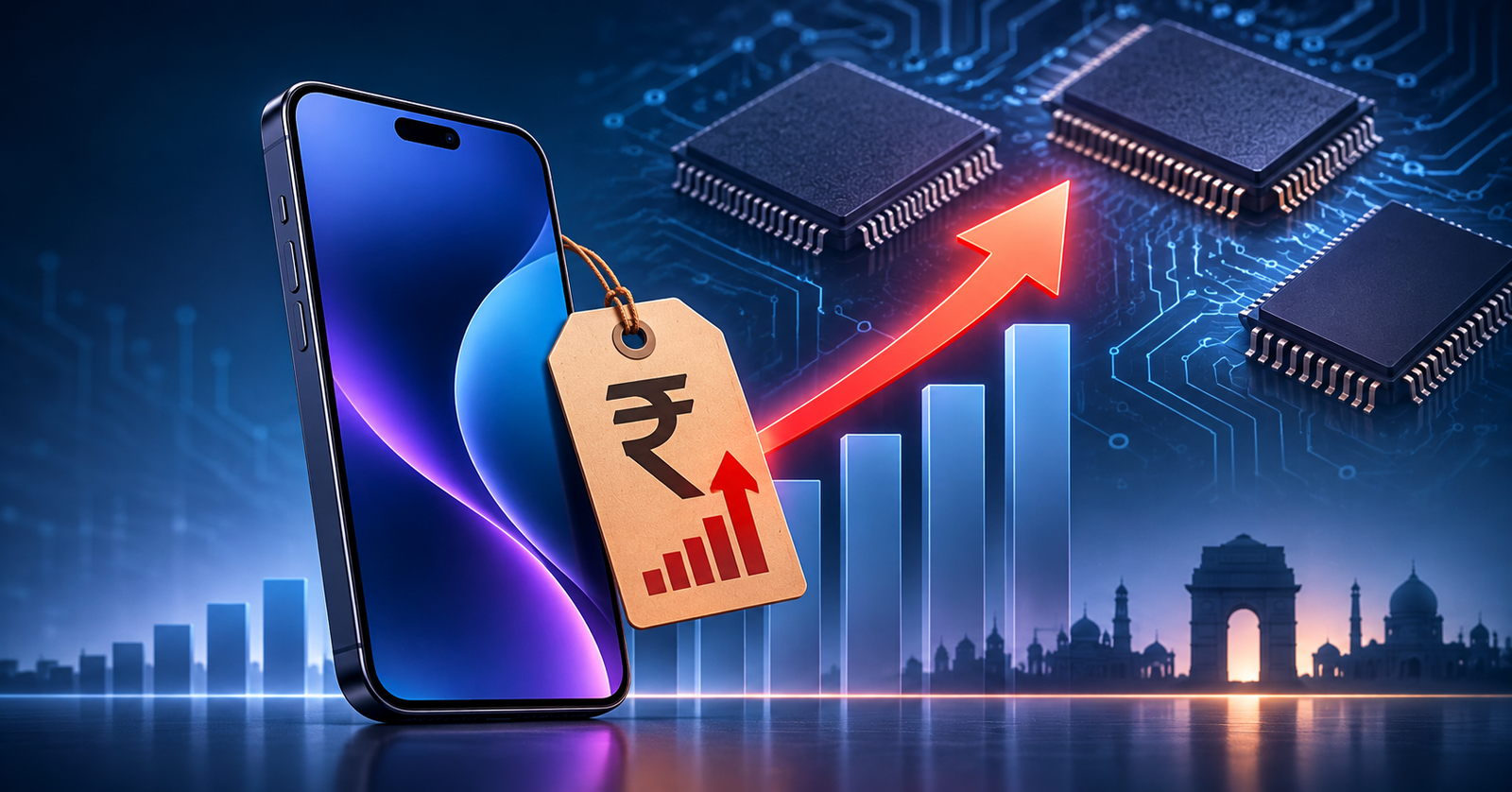
The Indian market is uniquely vulnerable because it is price-sensitive. Over 60% of smartphones sold in India are priced below ₹20,000. When memory costs rise, the entry-level segment feels it first and hardest.
Techarc expects fewer launches below ₹10,000 and a rise in average selling prices. Consumers may hold onto their phones longer—Xiaomi reports that the average replacement cycle in India has stretched to nearly four years.
10. Should You Buy a Smartphone Now or Wait Until 2027?
This is the most practical question, and the answer depends on your situation:
- Buy now if: Your current phone is broken, slow, or no longer receives security updates. Waiting is unlikely to bring lower prices—brands are more likely to reduce specifications than to cut prices.
- Wait if: Your phone still works fine. But do not wait expecting a “deal.” The era of aggressive festive discounts is fading. IDC noted that discounts in 2026 were already shallower because brands cannot afford them.
As Nothing founder Carl Pei put it bluntly: “If you’ve been waiting to upgrade a device, the best time was yesterday. The next best time is now”.
11. Expert Expectations and Future Smartphone Market Trends
Experts broadly agree on three things:
- DRAM will stay tight through 2027. TrendForce expects DRAM supply to remain constrained as AI demand continues to outpace supply.
- NAND may soften slightly. New NAND capacity is coming online, and TrendForce expects NAND contract prices to potentially decline from Q2 2027. But even if NAND gets cheaper, DRAM is the bigger problem.
- The ₹1 lakh flagship is here to stay. Counterpoint notes that the premium segment is shifting from ₹50,000–₹70,000 to ₹1 lakh and above.
Key Events Leading to the 2027 Price Pressure
12. Conclusion
The memory chip shortage is not a temporary glitch. It is a structural shift driven by the AI boom, and its effects will be felt by smartphone buyers in India throughout 2027. Budget phones will face the most pressure, and brands will likely respond with a mix of price hikes and specification reductions.
The best thing you can do is stay informed. If you need a new phone, buy one that meets your needs today—waiting for a dramatic price drop is probably not a winning strategy this cycle. And when you do buy, pay attention to the RAM and storage configuration; those numbers matter more than ever.
Frequently Asked Questions
📱 More from TechDiary
Best Tablets for Students in 2026 · Best Mobile for Vlogging in 2026 · Why Can't You Use Your Phone During a Flight?
🔗 Reliable Sources
भारतात 2027 मध्ये स्मार्टफोनच्या किंमती का वाढू शकतात – मेमरी चिपची कमतरता समजून घ्या
थोडक्यात: जर तुम्ही 2027 मध्ये नवीन स्मार्टफोन घेण्याचा विचार करत असाल, तर किंमती जास्त असतील—विशेषतः बजेट सेगमेंटमध्ये. AI डेटा सेंटर्समुळे निर्माण झालेली जागतिक मेमरी चिपची कमतरता RAM आणि स्टोरेज महाग करत आहे. एंट्री-लेव्हल फोन्सवर सर्वात जास्त परिणाम होऊ शकतो. सोप्या भाषेत सर्व माहिती येथे वाचा.
1. प्रस्तावना – 2027 मध्ये स्मार्टफोनच्या किंमती का वाढू शकतात
जर तुम्ही फोन अपग्रेड करण्याचा विचार करत असाल, तर 2026 ने तुम्हाला आधीच इशारा दिला असेल: किंमती वाढत आहेत. 2026 च्या पहिल्या सहामाहीत भारतात स्मार्टफोनची सरासरी विक्री किंमत सुमारे 16% ने वाढली. ₹10,000 खालील बजेट फोन्स सरासरी 32% महाग झाले.
पण मोठा प्रश्न आहे: 2027 मध्ये काय होईल? उत्तर एका छोट्या घटकात दडलेले आहे ज्याचा बहुतेक लोक विचार करत नाहीत—मेमरी चिप. मार्केट रिसर्च फर्म Techarc नुसार, भारतातील स्मार्टफोन ब्रँड्सना 2027 मध्ये मेमरी खर्च भरून काढण्यासाठी 45% किंमत समायोजन आवश्यक असू शकते. याचा अर्थ किरकोळ किमती 45% ने उडतील असा होत नाही—ब्रँड्स त्यातील काही भाग शोषून घेतील. पण वारा कोणत्या दिशेने वाहतो हे स्पष्ट आहे.
हा लेख मेमरी चिपची कमतरता सोप्या भाषेत समजावून सांगतो, प्रत्येक भारतीय स्मार्टफोन खरेदीदारासाठी ती का महत्त्वाची आहे, आणि 2027 मध्ये तुम्ही काय अपेक्षा करू शकता.
2. मेमरी चिप काय आहे? RAM, DRAM आणि NAND सोप्या भाषेत
प्रत्येक स्मार्टफोनमध्ये दोन प्रकारची मेमरी असते, आणि त्या वेगवेगळी कामे करतात:
- DRAM (डायनॅमिक रँडम ॲक्सेस मेमरी): ही “कार्यरत मेमरी” किंवा RAM. तुम्ही वापरत असलेले ॲप्स, एडिट करत असलेले फोटो, उघडलेली वेबपेजेस तात्पुरती साठवते. जास्त RAM म्हणजे जास्त ॲप्स रीलोड न होता चालू ठेवता येतात.
- NAND फ्लॅश: ही स्टोरेज मेमरी. तुमचे फोटो, व्हिडिओ, ॲप्स आणि फाइल्स फोन बंद असतानाही साठवून ठेवते. बॉक्सवर लिहिलेले “128GB” किंवा “256GB” म्हणजे NAND स्टोरेज.
DRAM आणि NAND दोन्ही मोठ्या सेमीकंडक्टर कारखान्यांमध्ये तयार होतात. आणि सध्या, ज्यांना हव्या आहेत त्या सर्वांसाठी पुरेशा नाहीत.
3. जागतिक मेमरी चिपची कमतरता का आहे?
कारखाने अचानक बंद पडल्यामुळे कमतरता नाही. कारण जगातील सर्वात मोठे मेमरी उत्पादक—सॅमसंग, SK हायनिक्स आणि मायक्रॉन—वेगळ्या, अधिक नफा देणाऱ्या मेमरीचा प्रकार बनवण्याकडे वळले आहेत.
त्या उत्पादनाला HBM (हाय बँडविड्थ मेमरी) म्हणतात. ती AI सर्व्हर आणि डेटा सेंटर्समध्ये वापरली जाते, आणि फोनमध्ये वापरल्या जाणाऱ्या मेमरीपेक्षा खूप जास्त किंमतीला विकली जाते. TrendForce नुसार, 2026 च्या सुरुवातीला ग्राहक इलेक्ट्रॉनिक्ससाठी DRAM किंमती तिमाहीत 60–70% ने वाढल्या, तर NAND किंमती आणखी जास्त वाढल्या.
SK हायनिक्सकडे काही काळ फक्त चार आठवड्यांचा साठा उरला होता—अत्यंत कमी पातळी. सोप्या शब्दात: मेमरी उद्योग AI ग्राहकांना प्राधान्य देत आहे, आणि स्मार्टफोन उत्पादक रांगेत थांबले आहेत.
4. AI डेटा सेंटर्स मेमरी पुरवठा कसा खात आहेत
एक आकडा परिप्रेक्ष्य देतो: एकच AI सर्व्हर पारंपरिक सर्व्हरपेक्षा 8 ते 10 पट जास्त मेमरी वापरू शकतो. आणि Google, Microsoft, Amazon आणि Meta सारख्या कंपन्या अशा लाखो सर्व्हर बांधत आहेत.
ते “ओपन-एंडेड” ऑर्डर देत आहेत—म्हणजे पुरवठादार जितकी मेमरी देऊ शकतील तितकी ते जवळपास किंमतीची पर्वा न करता खरेदी करतील. मेमरी उत्पादकांसाठी हा स्वप्नातील ग्राहक आहे. स्मार्टफोन ब्रँड्ससाठी ते दुःस्वप्न आहे.
मायक्रॉनच्या CEO ने सार्वजनिकरित्या सांगितले आहे की 2027 आणि 2028 दोन्ही वर्षांत मेमरीची मागणी पुरवठ्यापेक्षा जास्त राहण्याची अपेक्षा आहे. ही अल्पकालीन वाढ नाही; हा बहुवर्षीय बदल आहे.
5. स्मार्टफोन उत्पादकांना उत्पादन खर्च का जास्त येऊ शकतो
पूर्वी मेमरी फोनच्या एकूण खर्चाचा छोटा भाग होता. 2025 च्या सुरुवातीला, प्रीमियम फोनच्या बिल ऑफ मटेरियल्समध्ये मेमरी सुमारे 13% होती. 2026 च्या अखेरीस तो वाटा 40% पेक्षा जास्त झाला.
बजेट फोन्ससाठी परिस्थिती आणखी गंभीर आहे. Techarc चा अंदाज आहे की 2027 मध्ये एंट्री-लेव्हल स्मार्टफोनच्या बांधणी खर्चात मेमरीचा वाटा 76% असू शकतो. जेव्हा एखादा घटक इतका महाग होतो, तेव्हा काहीतरी द्यावे लागते—एकतर किंमत वाढते, किंवा स्पेसिफिकेशन्स कमी होतात.
6. भारतातील बजेट, मिड-रेंज आणि प्रीमियम स्मार्टफोनवर परिणाम
वेदना समान प्रमाणात होणार नाही. प्रत्येक सेगमेंटवर कसा परिणाम होईल ते पाहू:
| सेगमेंट | अपेक्षित परिणाम |
|---|---|
| बजेट (₹12,000 खालील) | सर्वाधिक दबाव. बांधणी खर्चात मेमरी 76% असू शकते. ब्रँड्स RAM/स्टोरेज कमी करू शकतात किंवा कमी मॉडेल्स लाँच करू शकतात. Techarc नुसार केवळ मेमरी खर्चासाठी 72% “कॅच-अप” आवश्यक. |
| मिड-रेंज (₹15,000–₹40,000) | मध्यम दबाव. किंमती वाढण्याची शक्यता, पण कमी तीव्रतेने. ब्रँड्स बेस व्हेरियंटमध्ये 8GB ऐवजी 6GB RAM किंवा 256GB ऐवजी 128GB स्टोरेज देऊ शकतात. |
| प्रीमियम (₹50,000 पेक्षा जास्त) | प्रीमियम फ्लॅगशिप्सना 2026 अखेरपर्यंत 30%+ किंमत वाढ आधीच दिसत आहे. ₹1 लाख किंमत बिंदू सामान्य होत आहे. |
7. सॅमसंग, ॲपल, शाओमी, व्हिवो, ओप्पो किंमती वाढवतील का?
बहुतेक प्रमुख ब्रँड्सनी 2026 मध्ये आधीच किंमती वाढवल्या आहेत. 2027 मध्ये वाढ सुरू राहील का हा प्रश्न आहे.
सॅमसंग ने दिवाळी 2026 नंतर ₹2,000–₹4,000 ने किंमती वाढवल्या, आणि Galaxy S26 फ्लॅगशिपमध्ये 17% वाढ झाली. शाओमी इंडियाच्या नेतृत्वाने स्पष्टपणे इशारा दिला आहे की “उद्योगात आणखी किंमत वाढ होणार”. ओप्पो फ्लॅगशिप उपकरणांमध्ये सर्वाधिक वाढ दिसली—Counterpoint नुसार वर्षानुवर्ष 82–87%.
ॲपल देखील अपवाद नाही. प्रीमियम सेगमेंटमध्ये iPhone किंमती वर्षानुवर्ष 20–22% ने वाढल्या. ॲपलकडे खर्च शोषून घेण्याची जास्त क्षमता असली, तरी ते क्वचितच गुपचूप करते.
8. स्मार्टफोनची RAM आणि स्टोरेज कॉन्फिगरेशन बदलतील का?
होय—आणि हे आधीच होत आहे. Q4 2026 मध्ये, नव्याने लाँच झालेल्या स्मार्टफोनपैकी 54% ची बेस RAM 4GB किंवा कमी होती, तर वर्षापूर्वी ती फक्त 21% होती. 64GB किंवा कमी स्टोरेज असलेल्या फोनचा वाटा 8% वरून 36% झाला.
सोप्या शब्दात: ब्रँड्स तुम्हाला त्याच किंमतीत कमी मेमरी देत आहेत. हा कल 2027 मध्ये सुरू राहण्याची शक्यता आहे. 2025 मध्ये मानक वाटणारे “8GB + 128GB” बेस कॉन्फिगरेशन कमी सामान्य होऊ शकते, विशेषतः बजेट सेगमेंटमध्ये.
9. 2027 मध्ये भारतीय स्मार्टफोन खरेदीदारांवर काय परिणाम होईल?
भारतीय बाजार विशेषतः संवेदनशील आहे कारण तो किंमत-संवेदनशील आहे. भारतात विकल्या जाणाऱ्या 60% पेक्षा जास्त स्मार्टफोन ₹20,000 खालील किंमतीचे आहेत. जेव्हा मेमरी खर्च वाढतो, तेव्हा एंट्री-लेव्हल सेगमेंटला सर्वात आधी आणि सर्वात जास्त फटका बसतो.
Techarc ला ₹10,000 खालील कमी लाँचेस आणि सरासरी विक्री किंमतीत वाढ अपेक्षित आहे. ग्राहक त्यांचे फोन जास्त काळ ठेवू शकतात—शाओमीचा अहवाल आहे की भारतात सरासरी बदली चक्र जवळपास चार वर्षे झाले आहे.
10. आता स्मार्टफोन घ्यावा की 2027 पर्यंत थांबावे?
हे सर्वात व्यावहारिक प्रश्न आहे, आणि उत्तर तुमच्या परिस्थितीवर अवलंबून आहे:
- आता घ्या जर: तुमचा सध्याचा फोन खराब आहे, हळू आहे, किंवा सुरक्षा अपडेट्स मिळत नाहीत. थांबल्याने कमी किंमती मिळतील अशी शक्यता कमी आहे—ब्रँड्स किंमती कमी करण्यापेक्षा स्पेसिफिकेशन्स कमी करण्याची शक्यता जास्त आहे.
- थांबा जर: तुमचा फोन अजून चांगला चालत आहे. पण “डील” च्या अपेक्षेने थांबू नका. आक्रमक सणासुदीच्या सवलती संपत आहेत. IDC ने नमूद केले की 2026 मध्ये सवलती आधीच कमी होत्या कारण ब्रँड्स परवडत नव्हते.
Nothing चे संस्थापक कार्ल पेई यांनी स्पष्ट सांगितले: “जर तुम्ही डिव्हाइस अपग्रेड करण्याची वाट पाहत असाल, तर सर्वोत्तम वेळ काल होता. पुढची सर्वोत्तम वेळ आता आहे”.
11. तज्ज्ञांची अपेक्षा आणि भविष्यातील स्मार्टफोन मार्केट ट्रेंड
तज्ज्ञ तीन गोष्टींवर मोठ्या प्रमाणात सहमत आहेत:
- DRAM 2027 पर्यंत तंग राहील. AI मागणी पुरवठ्यापेक्षा पुढे राहिल्याने DRAM पुरवठा मर्यादित राहील अशी TrendForce अपेक्षा आहे.
- NAND थोडे मऊ होऊ शकते. नवीन NAND क्षमता येत आहे, आणि TrendForce ला Q2 2027 पासून NAND करार किंमती घटण्याची शक्यता आहे. पण NAND स्वस्त झाली तरी DRAM मोठी समस्या आहे.
- ₹1 लाख फ्लॅगशिप कायम राहील. Counterpoint नमूद करते की प्रीमियम सेगमेंट ₹50,000–₹70,000 वरून ₹1 लाख आणि त्याहून अधिककडे सरकत आहे.
2027 च्या किंमत दबावाकडे नेणारे प्रमुख टप्पे
12. निष्कर्ष
मेमरी चिपची कमतरता तात्पुरती गडबड नाही. हा AI बूममुळे झालेला संरचनात्मक बदल आहे, आणि त्याचे परिणाम भारतातील स्मार्टफोन खरेदीदारांना 2027 भर जाणवतील. बजेट फोन्सवर सर्वाधिक दबाव असेल, आणि ब्रँड्स किंमत वाढ आणि स्पेसिफिकेशन कपात यांच्या मिश्रणाने प्रतिसाद देतील.
तुम्ही करू शकता ती सर्वोत्तम गोष्ट म्हणजे माहिती ठेवणे. जर तुम्हाला नवीन फोन हवा असेल, तर आज तुमच्या गरजा पूर्ण करणारा फोन घ्या—नाटकीय किंमत घटीची वाट पाहणे या चक्रात कदाचित फायद्याचे ठरणार नाही. आणि खरेदी करताना, RAM आणि स्टोरेज कॉन्फिगरेशनकडे लक्ष द्या; हे आकडे आता पूर्वीपेक्षा जास्त महत्त्वाचे आहेत.
वारंवार विचारले जाणारे प्रश्न
📱 TechDiary वरून अधिक
2026 मधील विद्यार्थ्यांसाठी सर्वोत्तम टॅबलेट्स · 2026 मधील व्ह्लॉगिंगसाठी सर्वोत्तम मोबाइल · फ्लाइटमध्ये फोन का वापरू शकत नाही?